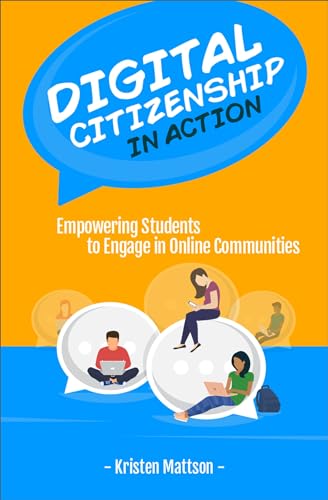
Digital citizenship in action : empowering students to engage in online communities / Kristen Mattson.
Publication details: Portland, Oregon : International Society for Technology in Education, 2017. Edition: First editionDescription: xi, 120 pages ; 22 cmISBN:- 9781564843937 (paperback)
- 9781564846433 (mobi)
- 9781564846457 (pdf)
- HM742 .M375D
| ประเภททรัพยากร | ห้องสมุดที่อยู่ปัจจุบัน | หมวดหมู่ | เลขเรียกหนังสือ | สถานะ | วันกำหนดส่ง | บาร์โค้ด | จำนวนรายการจอง |
|---|---|---|---|---|---|---|---|
 หนังสือ
|
PIM EEC Library | หนังสือภาษาอังกฤษ | HM742 .M375D 2017 (เรียกดูชั้นหนังสือ(เปิดด้านล่าง)) | พร้อมให้บริการ | 32550000505558 |
เรียกดูชั้นหนังสือของ PIM EEC Library ปิดเครื่องมือเรียกดูชั้นหนังสือ (ซ่อนเครื่องมือเรียกดูชั้นหนังสือ)

|

|

|

|

|

|

|
||
| HM623 .พ879 การเรียนรู้ลักษณะการจัดการ : การจัดการข้ามวัฒนธรรม = / | HM716 .ช795 2558 แชร์ชีวิตออนไลน์ Digital Life | HM742 .ม584ว 2562 Why we post : ส่องวัฒนธรรมโซเชียลมีเดียผ่านมานุษยวิทยาดิจิทัล / | HM742 .M375D 2017 Digital citizenship in action : empowering students to engage in online communities / | HM786 .S561 2005 Organizing and organizations / | HM786 .S63 The sociology of organizations : classic, contemporary, and critical readings / | HM791 .M37 Organizational culture : mapping the terrain / |
Includes bibliographical references and index.
Creating space for digital citizenship -- Acknowledging student voice in digital spaces -- Helping students understand their roles in digital communities -- Participating through respectful discourse -- Networking to make meaningful connections -- Making contributions that matter.
"For years, much of the available curricula for teaching digital citizenship focused on "don'ts." Don't share addresses or phone numbers. Don't give out passwords. Don't bully other students. But the conversation then shifted and had many asking, "Why aren't we teaching kids the power of social media?" Next, digital citizenship curriculum moved toward teaching students how to positively brand themselves so that they would stand out when it came to future scholarships and job opportunities. In the end, both messages failed to address one of the most important aspects of citizenship: being in community with others. As citizens, we have a responsibility to give back to the community and to work toward social justice and equity. Digital citizenship curricula should strive to show students possibilities over problems, opportunities over risks and community successes over personal gain. In Digital Citizenship in Action, you'll find practical ways for taking digital citizenship lessons beyond a conversation about personal responsibility so that you can create opportunities for students to become participatory citizens, actively engaging in multiple levels of community and developing relationships based on mutual trust and understanding with others in these spaces"--


ไม่มีความคิดเห็นใด ๆ ต่อชื่อเรื่องนี้